If you own a home on a septic system in Iowa, the cost of pumping your tank is one of those numbers you only think about every few years, right around the time you start wondering if that gurgle in the basement drain is your imagination. Then a quote shows up and you're left wondering: is $400 fair, is $700 a rip-off, and why did your neighbor pay half what you did?
This guide breaks down what septic tank pumping typically costs in Iowa in 2026, what factors actually move the price, and how to avoid surprise charges when the truck pulls into your driveway.
Average Cost of Septic Tank Pumping in Iowa
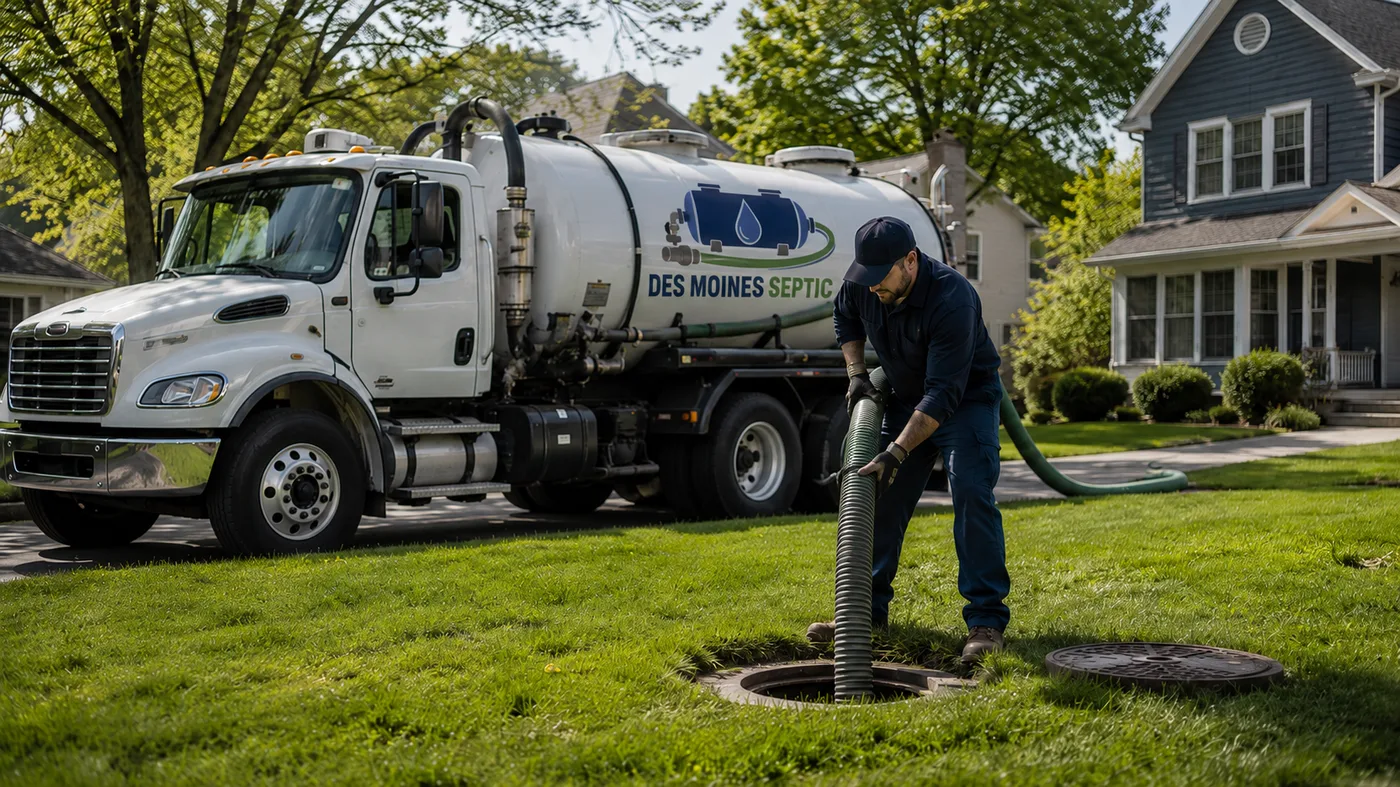
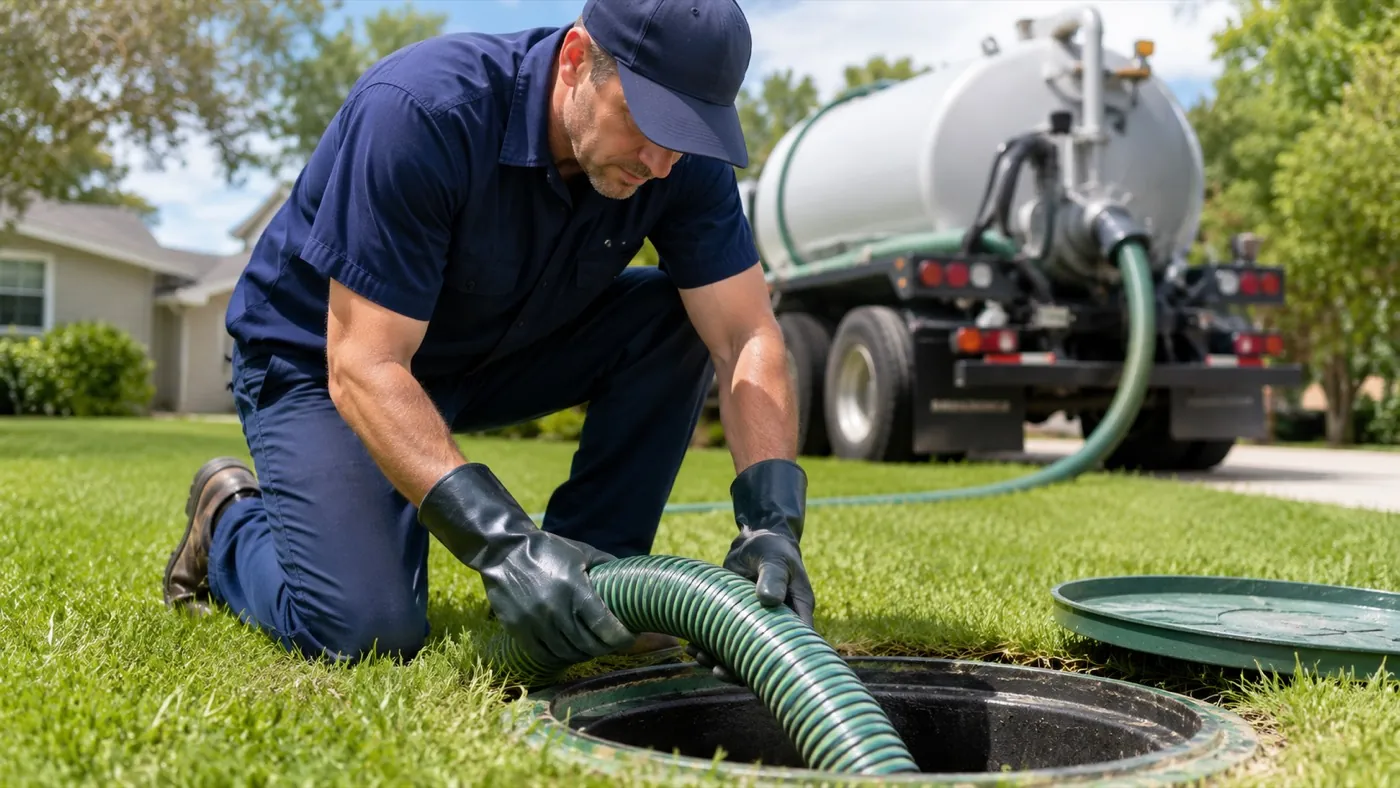
For a standard residential septic tank in Iowa, expect to pay roughly $375 to $650 for a routine pump-out in 2026. Most Des Moines metro homeowners we talk to land somewhere in the $375 to $525 range for a typical 1,000 to 1,250 gallon tank with reasonable access.
Those numbers are directionally accurate, but pumping price is local. A pumper based 30 miles from the nearest disposal site is going to quote differently than one in town. The number you should care about is the quote you get on the phone for your specific tank, at your specific address, on the day you call.
What Actually Drives the Price
Five factors do most of the work in determining what you pay:
1. Tank Size
Iowa's most common residential tank sizes are 1,000, 1,250, and 1,500 gallons. Under 567 IAC Chapter 69, Iowa's residential minimum is 1,000 gallons, with 1,250 gallons functioning as the practical floor for most three-bedroom homes. Larger tanks hold more waste, take longer to pump, and cost more to dispose of. A 1,500 gallon tank can run 30 to 50 percent more than a 1,000 gallon pump-out at the same address.
2. Tank Access
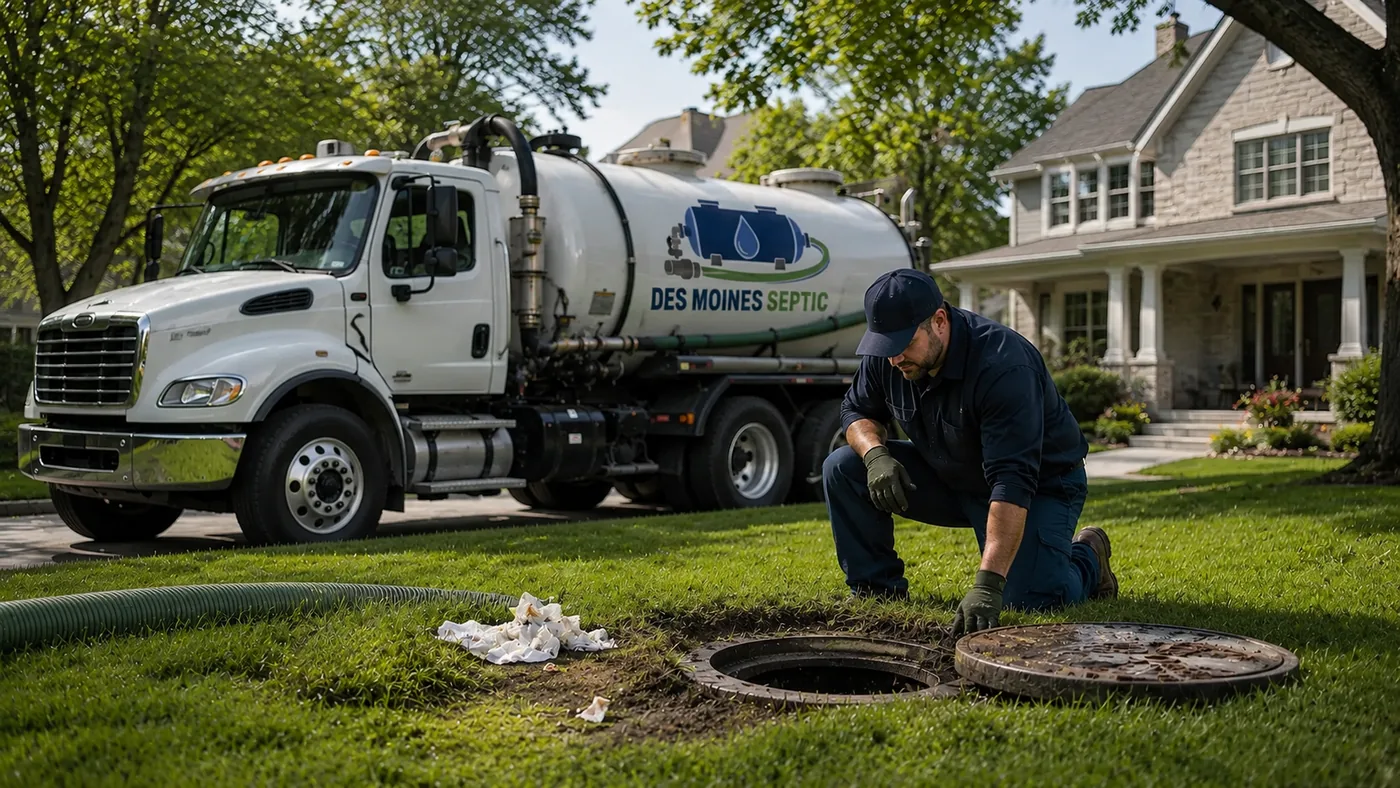
This is the biggest variable most homeowners don't think about. If your tank has risers installed at grade level, a tech opens the lid, drops the hose, and you're done in 30 minutes. If your lid is buried under 18 inches of soil and a flower bed, you're paying for digging time. Some pumpers charge a flat dig fee ($75 to $200), others bill hourly.
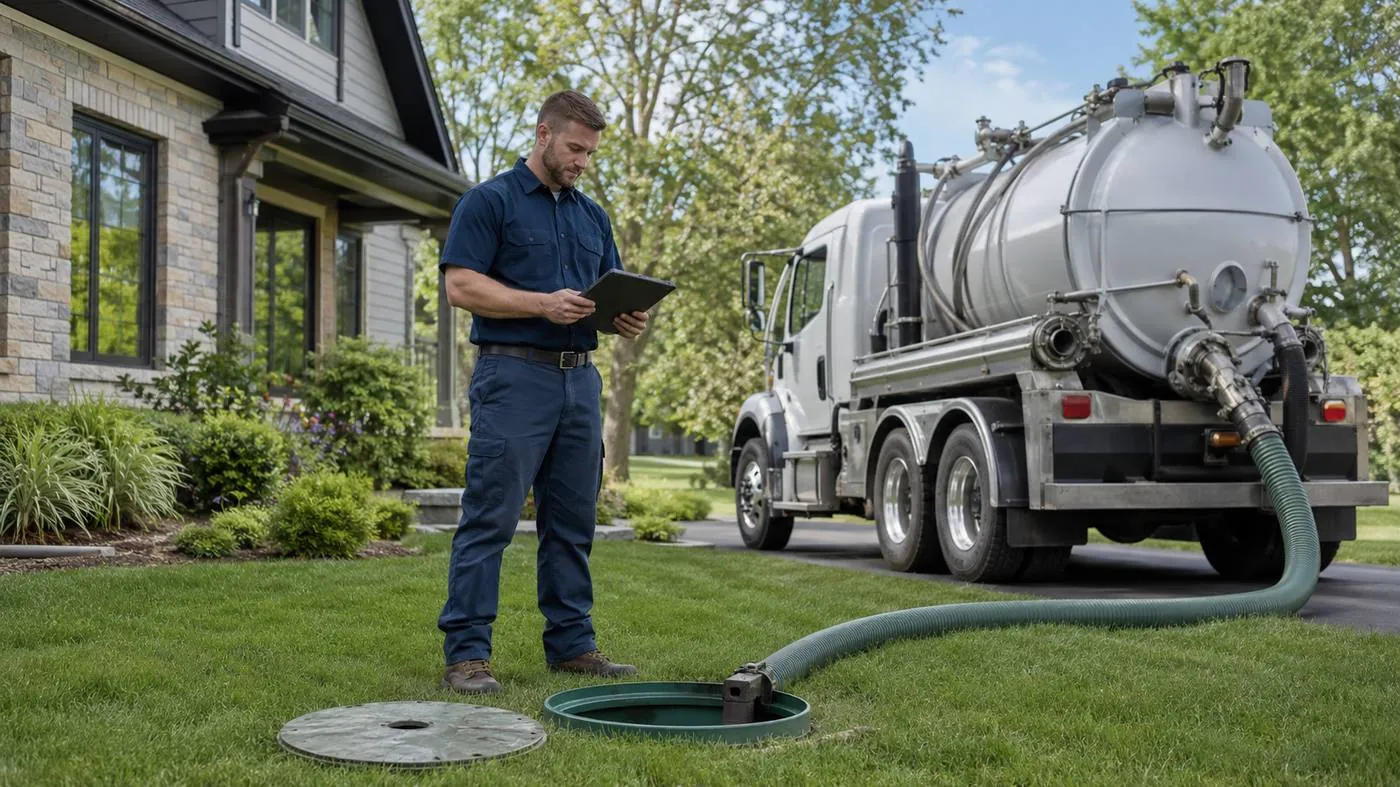
If you've been digging up your lid every pump-out cycle, installing risers usually pays for itself within two or three pumpings.
3. Disposal Distance
Pumpers haul septage to permitted receiving facilities, and Iowa is a big state. If you're in rural Polk, Dallas, or Madison County and your pumper has to drive 25 miles to the nearest permitted site, that distance shows up in your quote. Urban Des Moines pumps are usually cheaper for this reason alone.
4. Time of Year
Winter pumping in Iowa is harder. Frozen ground over a buried lid means more digging. Snow cover hides risers. If your driveway is iced over and the truck can't get within hose range of the tank, you're looking at a longer job and a higher bill. Late spring through early fall is the easiest, cheapest window to pump.
5. Add-On Services
The base pump fee covers tank emptying and disposal. Anything else is extra:
- Riser installation: $200 to $500 per riser, often worth it long-term
- Baffle inspection or replacement: $100 to $400 depending on tank type
- Filter cleaning (if your tank has an effluent filter): $50 to $100
- Iowa Time of Transfer inspection: $300 to $600 separately, often bundled if you're selling the property
- Hydro-jetting a clogged inlet or outlet line: $200 to $500
Why Iowa Pumping Costs Are What They Are
A few Iowa-specific factors keep pricing in this range:
- Soil and frost depth. Iowa's frost line is 42 inches in Des Moines and pushes 58 inches statewide on average per National Weather Service Des Moines climate data. Lids buried below grade often sit at or near the frost line, which means winter pumping involves real labor.
- Rural service area. Many central Iowa septic pumpers cover three or four counties. Drive time gets baked into your quote, especially outside Polk County.
- Disposal fees vary. Permitted septage receiving facilities in Iowa charge by load. There's no statewide rate, so a pumper's per-gallon cost can shift based on where they're licensed to dump.
- Tank age and condition. Older concrete tanks in the Des Moines Lobe can develop cracked baffles or partially collapsed inlets, which slows pumping and sometimes leads to discovery of needed repairs.
Want a real price for your tank instead of a range? We give flat-rate septic pumping quotes over the phone based on your tank size, access, and ZIP code. No surprise charges when the truck arrives.
How to Avoid Surprise Charges
The single most common complaint we hear about other pumpers is "they quoted me $350 on the phone, then it was $625 when they left." Here's how to prevent that:
- Ask for a flat-rate quote. A reputable pumper can give you a firm price over the phone based on tank size, access, and ZIP code. If a company refuses to quote until they're on-site, get a different quote.
- Confirm what's included. Does the quote cover disposal, dig time if needed, and filter cleaning? Or are those add-ons?
- Know your tank size and last pump date. If you don't know, your county may have records. In Polk County, septic permits and installations are tracked through Public Works Environmental Health Services.
- Get receipts. Iowa's Time of Transfer rule accepts proof of pumping within the prior three years as part of an inspection. A receipt is worth keeping.
- Avoid "free inspection" sales pitches. Some operators use a low pump price to upsell unneeded repairs. A legitimate pumper will tell you what needs attention without pressuring you on the spot. The Iowa Onsite Waste Water Association (IOWWA) maintains a list of trained Iowa septic professionals you can cross-reference.
When Pumping Won't Be Enough
Sometimes a pumper arrives and finds the issue isn't a full tank. It's a failed drain field, a broken inlet baffle, or roots in the lateral lines. In those cases, the pump-out is just diagnostic, and you're looking at a larger repair bill.
The good news: a recent pump-out report makes any follow-up work easier to scope. The bad news: you're still paying for the pump-out plus whatever comes next.
The EPA recommends pumping every three to five years for typical residential systems, and skipping that cadence is the leading cause of preventable drain field failure. If you suspect your system isn't working right (slow drains across the whole house, sewage smell in the yard, lush grass over the drain field), don't wait. Emergency septic service is cheaper than replacing a drain field that backed up sewage into your finished basement.
Get a Real Quote for Your Tank
Ballpark numbers are useful for budgeting, but the only number that matters is the one for your tank, today. We provide flat-rate septic tank pumping in Des Moines and the surrounding metro, with quotes confirmed on the phone before the truck rolls. No surprise charges, no upsell pressure.
Call us at (515) 303-4896 or request a free estimate online and we'll give you a real number based on your tank size, access, and location.