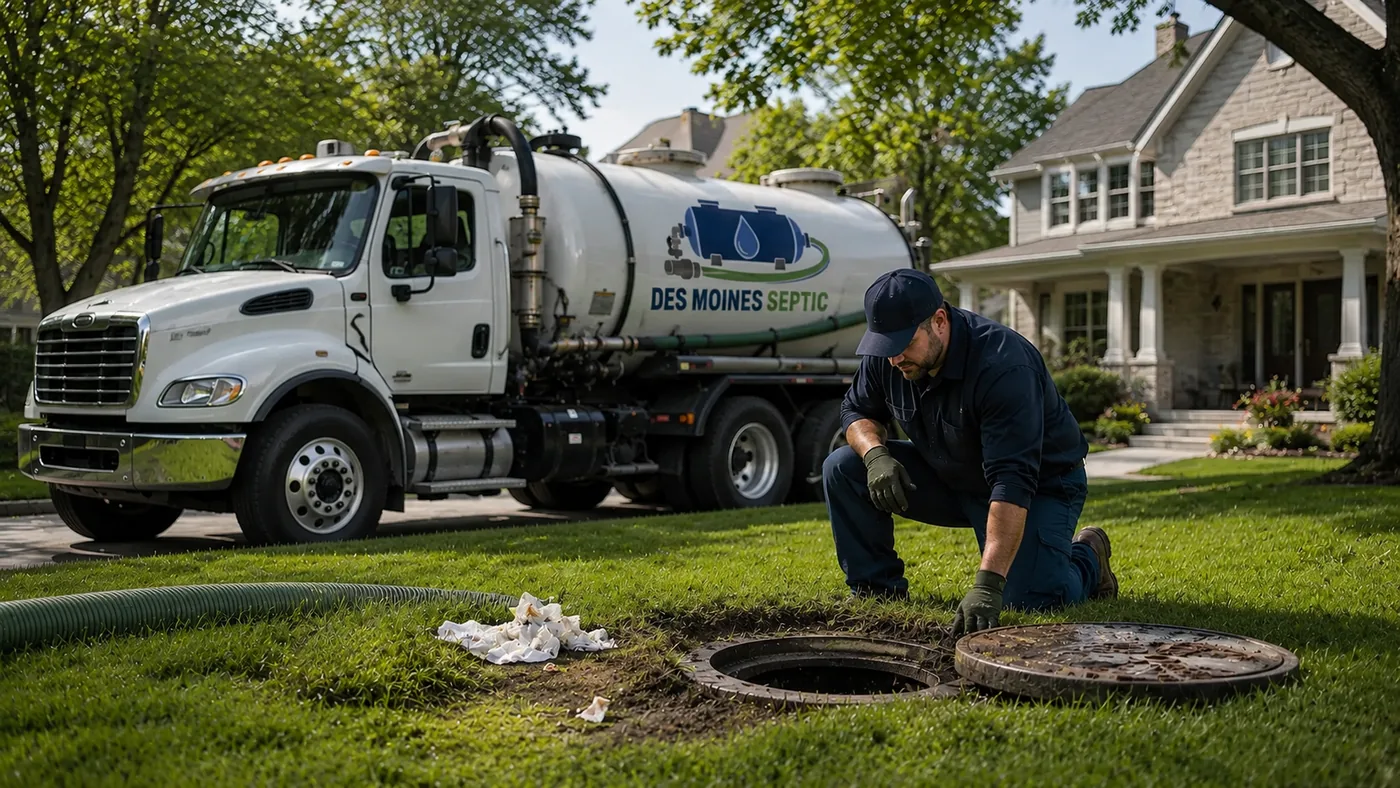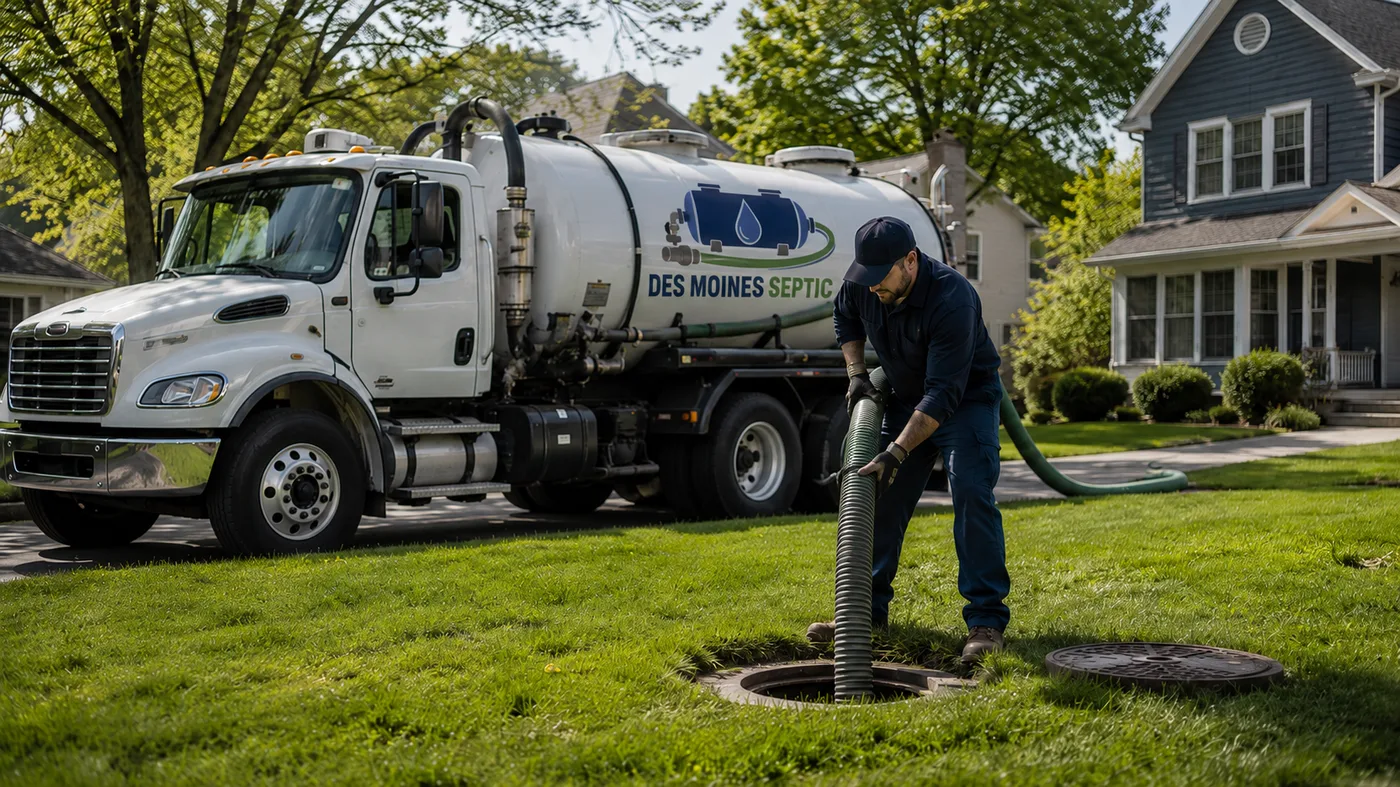
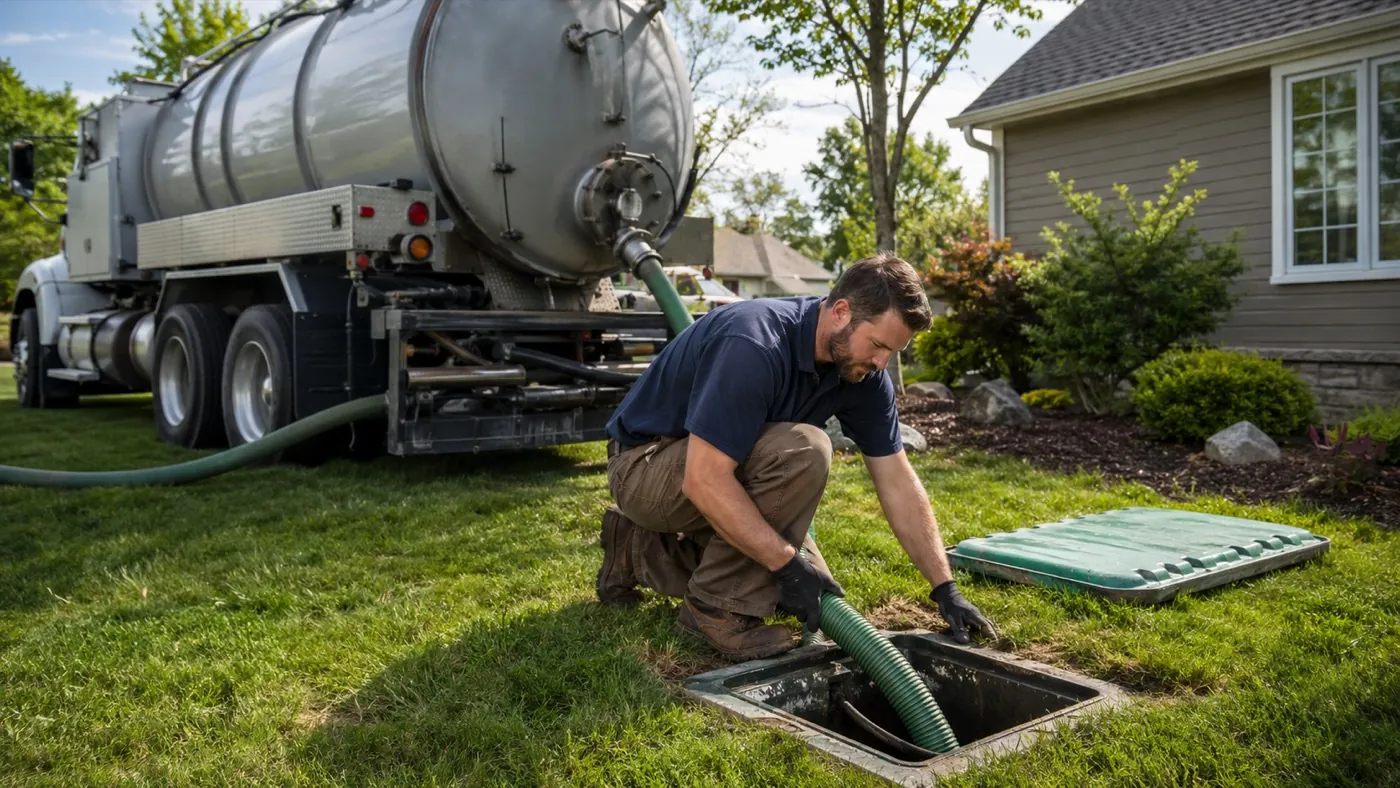
If you bought your Iowa home with a septic system and the previous owners left you with no records and a vague "we pumped it a few years ago, I think," you're in the same spot as most central Iowa homeowners. The septic system is the most expensive thing in your house you never think about, until it stops working.
The good news: keeping a septic tank running well is mostly about pumping it on a reasonable schedule. The not-so-good news: there is no single "correct" answer for how often. It depends on your tank size, your household, your soil, and a few Iowa-specific quirks.
The Short Answer
Most homes in Iowa should pump their septic tank every 3 to 5 years. This matches the U.S. Environmental Protection Agency's general guidance for residential septic systems. The EPA recommends inspecting your system at least every 3 years and pumping every 3 to 5 years for a typical household.
If you're at the start of that range, you're being cautious. If you're at the end, you're probably fine. If it's been seven years and you can't find a receipt, you're overdue.
Does Iowa Law Require a Pumping Schedule?
No. Iowa Code § 455B.172 and the rules in 567 IAC Chapter 69 do not require homeowners to pump their tanks on any specific cadence. The Iowa DNR's onsite wastewater program handles the regulatory side; the rest is up to homeowner discretion.
There is one practical exception. Iowa's Time of Transfer inspection rule (567 IAC 69.7) accepts a pumping receipt from within the prior three years as part of the inspection record. If you're planning to sell your home in the next few years, pumping within that three-year window simplifies the transfer.
So while Iowa doesn't mandate frequency, the resale rules effectively reward a three-year cadence for anyone who might sell.
Household Size Changes Everything
The single biggest factor in how fast your tank fills is how many people use it. A 1,000 gallon tank serving one retiree fills very differently than the same tank serving a family of five.
Rough guidance for a 1,000 gallon tank (general industry guideline, not a rule):
| Household Size | Pump Every |
|---|---|
| 1 to 2 people | 5 to 8 years |
| 3 to 4 people | 3 to 4 years |
| 5 to 6 people | 2 to 3 years |
| 7+ people | Annually |
Bump up one size category if you have a larger tank (1,250 or 1,500 gallons), and bump down one if you have a smaller or older tank. These numbers assume normal residential use. Daycare in the home, a home-based business with employees using the bathroom, or frequent guests all shorten the interval.
Can't remember when your tank was last pumped? If it's been more than five years, you're overdue. We provide same-week septic pumping across the Des Moines metro with flat-rate quotes on the phone.
What Else Speeds Up Your Pumping Schedule
Garbage Disposals
A kitchen garbage disposal can increase solids accumulation by 30 to 50 percent and may double how often you need to pump. Food scraps don't break down the way human waste does. If you use a disposal regularly, plan to pump every 2 to 3 years instead of 3 to 5.
Laundry Volume
Heavy laundry loads (especially with older top-load washers using 30 to 40 gallons per cycle) flush a lot of water through the tank, which can stir solids into the drain field and shorten field life. The pumping schedule itself doesn't shift much, but the consequences of skipping a pump-out get worse.
Tank Age
Older concrete tanks can develop cracked baffles or sediment buildup that reduces working volume. A 30-year-old tank labeled 1,000 gallons might effectively hold 800. Pump it on the same schedule as a smaller tank.
Long Vacancies
Counterintuitively, leaving a septic tank unused for months (snowbird homes, vacation properties) can actually be worse than steady use. The biological activity in the tank slows down, solids settle harder, and inlet/outlet lines can dry out. If your Iowa home sits empty for the winter, pump it before the gap, not after.
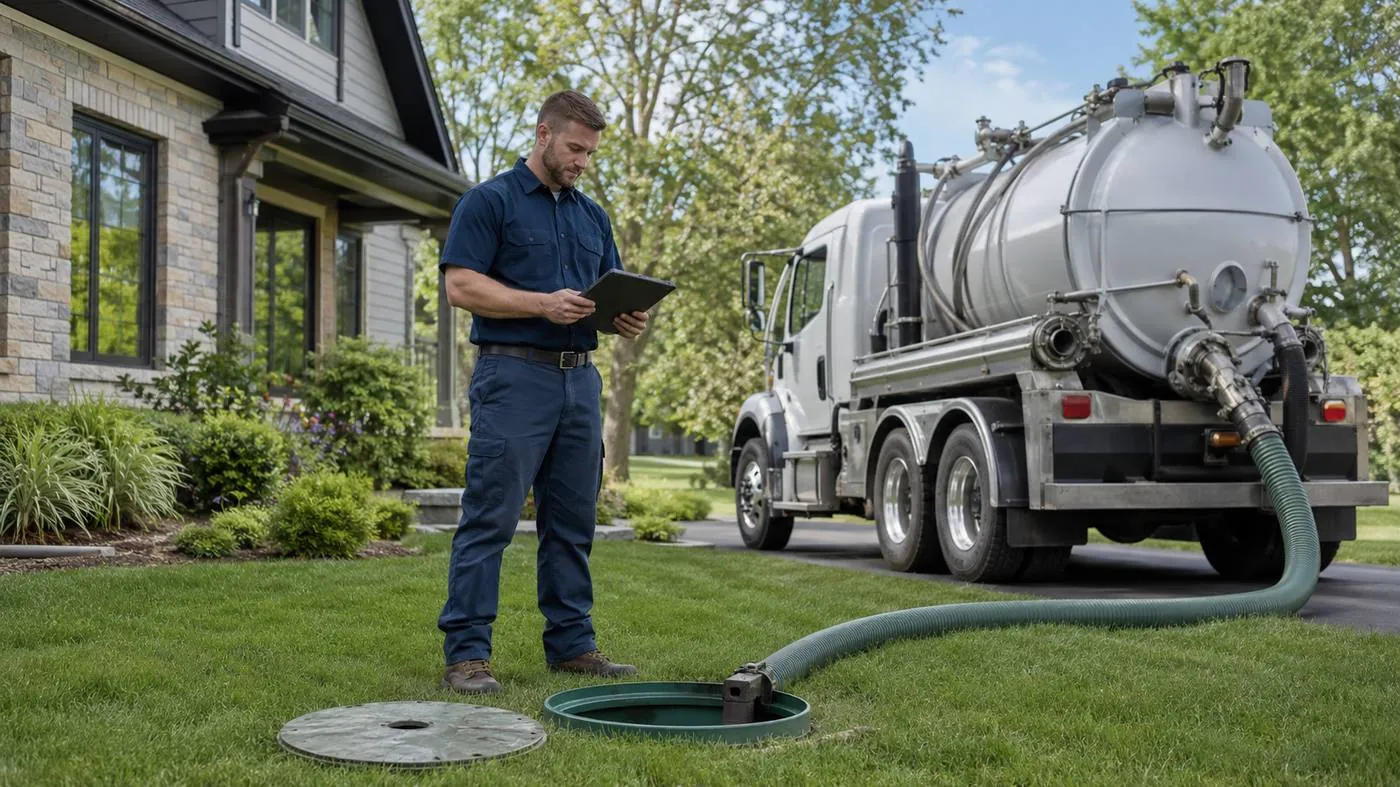
Iowa-Specific Factors
Three things make Iowa septic systems behave a little differently than systems in warmer or sandier states.
Frost Depth
The frost line in Des Moines is 42 inches per National Weather Service Des Moines climate data. Northern Iowa pushes past 48 inches in severe winters, and the statewide average is closer to 58. Drain field laterals are usually installed below frost line, but inlet pipes, risers, and shallow components can freeze if there's not enough warm wastewater flowing through them.
A tank that's mostly full going into a cold snap doesn't drain as efficiently, which puts more stress on the parts of the system that can freeze. Pumping in late summer or early fall (before frost season) is a small but real win.
Soil Regions
Iowa has two dominant soil regions for septic purposes. The Des Moines Lobe (most of central Iowa, including the Des Moines metro) is glacial till, often clay-heavy with slow percolation. The Southern Iowa Drift Plain is older, more weathered, and variable.
Clay-heavy soils don't tolerate drain field overload as well as sandy soils. A tank that's been pumped on time protects the drain field. A tank that's been ignored for a decade puts solids into the field, and clay soils punish that mistake faster than sandy ones.
Hard Water
Much of Iowa has hard groundwater, which means many homes use water softeners. The brine discharge from softener regeneration goes into the septic tank and can affect biological activity. The science on whether this matters is mixed, but if you have a softener and an old tank, that's another reason to pump on the shorter end of the recommended range.
How to Tell If You're Overdue
If you can't remember the last time your tank was pumped, you're overdue. That's the rule. A typical pumping receipt is worth keeping in a kitchen drawer (or your phone) for exactly this reason.
Other signs you should pump now rather than wait until next spring:
- Drains across the house are slowing in unison
- You hear gurgling in toilets or floor drains
- There's a faint sewage smell in the basement or backyard
- Grass over the drain field is suddenly greener or wetter than the rest of the yard
For the full list of warning signs and how to tell a full tank from a frozen line, see our guide to signs your septic tank needs pumping.
Pump on a Schedule, Not on an Emergency
Routine pumping costs $375 to $650 in Iowa. Emergency pumping when sewage is backing up into your basement on a Sunday night costs more, plus cleanup. Calendars are cheaper than emergencies.
If you're not sure when your tank was last pumped, or you know it's been more than five years, schedule a pump-out now. We provide septic tank pumping across the Des Moines metro with flat-rate quotes confirmed on the phone. To cross-reference licensed Iowa septic professionals, see the Iowa Onsite Waste Water Association. Call (515) 303-4896 or request a free estimate online.