If you're selling a home in Iowa that's on a septic system, there's a state law you need to know about before the closing date sneaks up on you. It's called the Time of Transfer (TOT) inspection rule, and it can quietly delay a real estate transaction, trigger a several-thousand-dollar repair, or kill a deal entirely if it's mishandled.
This guide explains what the Iowa Time of Transfer septic inspection actually requires, who has to inspect, how the timeline works, what happens when a system fails, and how sellers and buyers typically handle the cost.
What Is the Iowa Time of Transfer Inspection?
Iowa law requires that any private septic system serving a property being transferred (sold) must be inspected by a certified inspector before the title changes hands. The rule sits in Iowa Code § 455B.172(11), with implementing details in 567 IAC Chapter 69, rule 69.7.
The point of the rule is to keep failing septic systems from being passed quietly from seller to buyer. It puts a documented inspection on file with the Iowa Department of Natural Resources before the property changes hands.
Heads up: a revised version of 567 IAC Chapter 69 was adopted by Iowa's Environmental Protection Commission in 2025, held pending the 2026 Iowa Legislative Session, and took effect on May 4, 2026 following sine die adjournment. The core Time of Transfer framework (inspector certification, validity period, exemptions) remained stable through the revision, but some procedural details may have shifted. Always confirm current rules with your inspector or directly with Iowa DNR before scheduling.
Who Has to Get an Inspection?
If you're selling a property with a private septic system in Iowa, you almost certainly need a Time of Transfer inspection. This includes:
- Single-family homes on septic
- Acreages and rural properties
- Most cabins, second homes, and rental properties on septic
- Properties served by mound systems, conventional tanks, or aerobic treatment units (ATUs)
If you're on a municipal sewer connection, the rule doesn't apply.
Exemptions: When You Don't Need an Inspection
Iowa Code § 455B.172(11) lists specific exemptions. Common ones include:
- Court-ordered transfers
- Transfers between family members (spousal, parent-to-child, etc.)
- Transfers to or from a fiduciary in estate administration
- Foreclosure-related transfers to a mortgagee
- Transfers under $500
- Systems installed within two years of the transfer (already inspected at install)
- Transfers where the building will be demolished
The full list runs to 12 categories under Iowa Code § 455B.172(11)(a), restated in the administrative rules at 567 IAC 69.2(1)(a), with specific definitions. Additional categories include gift transfers, transfers to or from a government entity, tax sale transfers, deed in lieu of foreclosure, transfers involving a bankruptcy trustee, transfers between joint tenants or tenants in common, and transfers where the transferee intends to demolish the building. If you think you might qualify for an exemption, get it confirmed in writing through your title company or attorney before assuming you can skip the inspection. Misclassifying an exemption is a closing-day problem you don't want.
Who Can Perform the Inspection?
Only a certified Time of Transfer inspector with the Iowa Department of Natural Resources can perform the inspection. This is a DNR-issued credential, not a general plumbing or septic installer license. The Iowa DNR Time of Transfer program maintains the inspector database and accepts the filed reports.
The Iowa Onsite Waste Water Association (IOWWA), in partnership with DMACC's Onsite Wastewater Training Center, provides the training and continuing education for these inspectors. The DNR holds the actual certification. To stay certified, inspectors complete continuing education (1.2 CEUs every two years) and renew through DNR on a fixed cycle.
When you hire an inspector, ask for their DNR Time of Transfer inspector ID. Any certified inspector will provide it without hesitation.
Listing soon or already under contract? We provide Iowa DNR certified Time of Transfer inspections across Polk, Dallas, Warren, and Madison Counties, with reports filed directly with the state. The earlier we're on your calendar, the smoother your closing.
The Timeline: How Far in Advance Should You Schedule?
The inspection must occur before transfer of ownership. Iowa rules don't specify an exact number of days, but the inspection is valid for two years, which gives sellers flexibility.
Practical timing for most Iowa real estate transactions:
- If listing the property: schedule the inspection before you list, or within the first two weeks of marketing. This surfaces problems early.
- If under contract: schedule immediately. Don't wait for buyer inspection contingencies to expire.
- Winter sales: add a week or two. Frozen ground over buried tank lids slows access. A pumper-inspector combo visit can take longer in January than in June.
Closing can be delayed if the inspection report isn't filed in time, so build buffer into your timeline.
What the Inspection Actually Covers
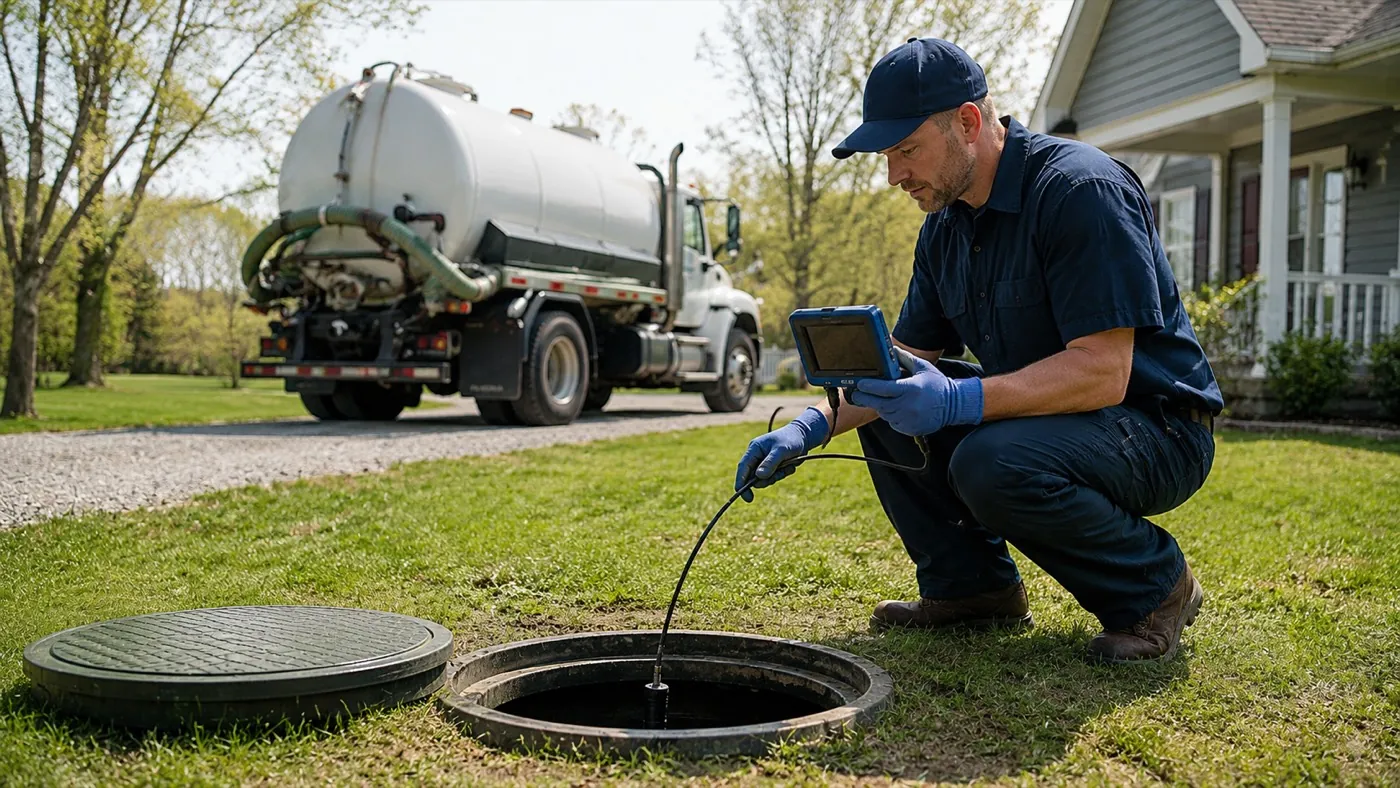
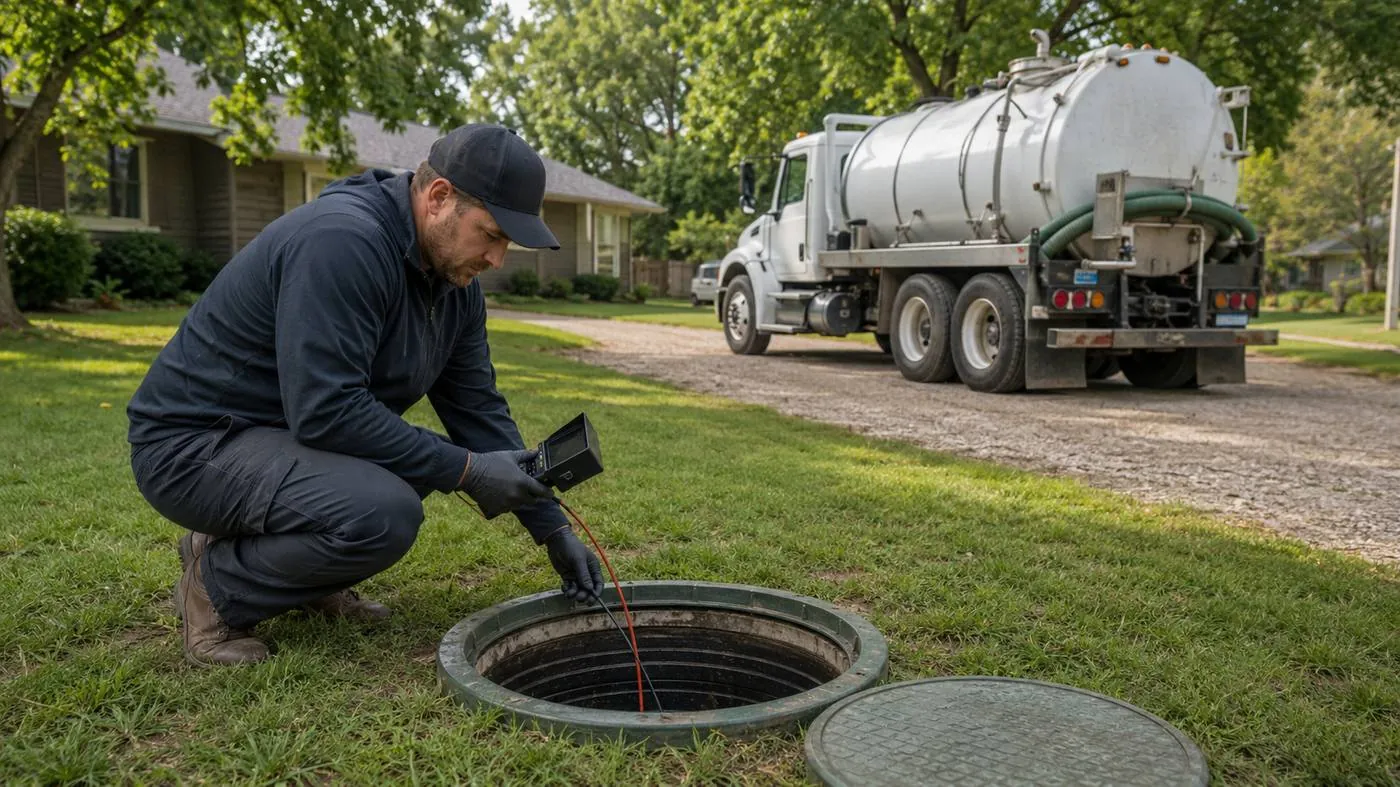
An Iowa TOT inspection is more involved than a casual look at the tank, and is more comprehensive than the general EPA decentralized wastewater inspection guidance applied in non-transfer contexts. The certified inspector will:
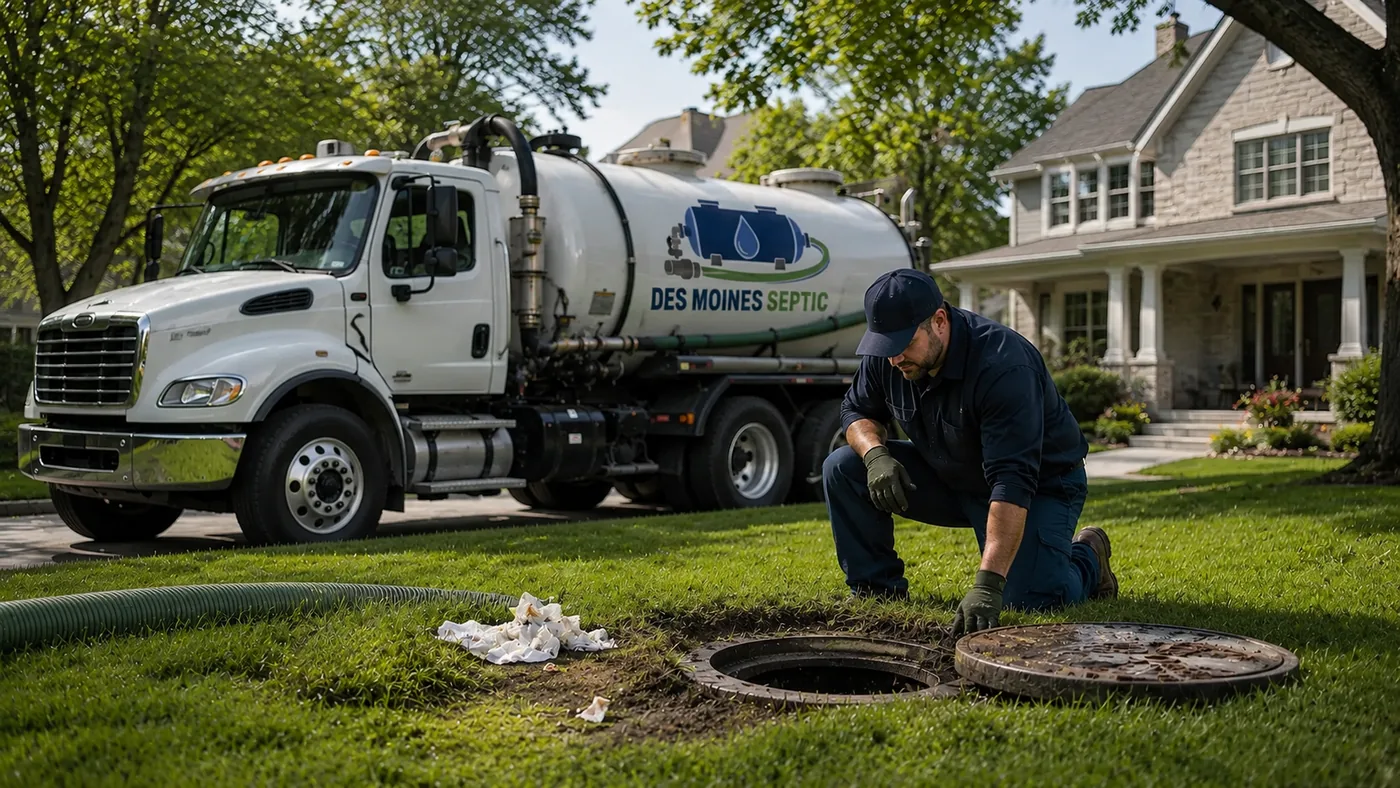
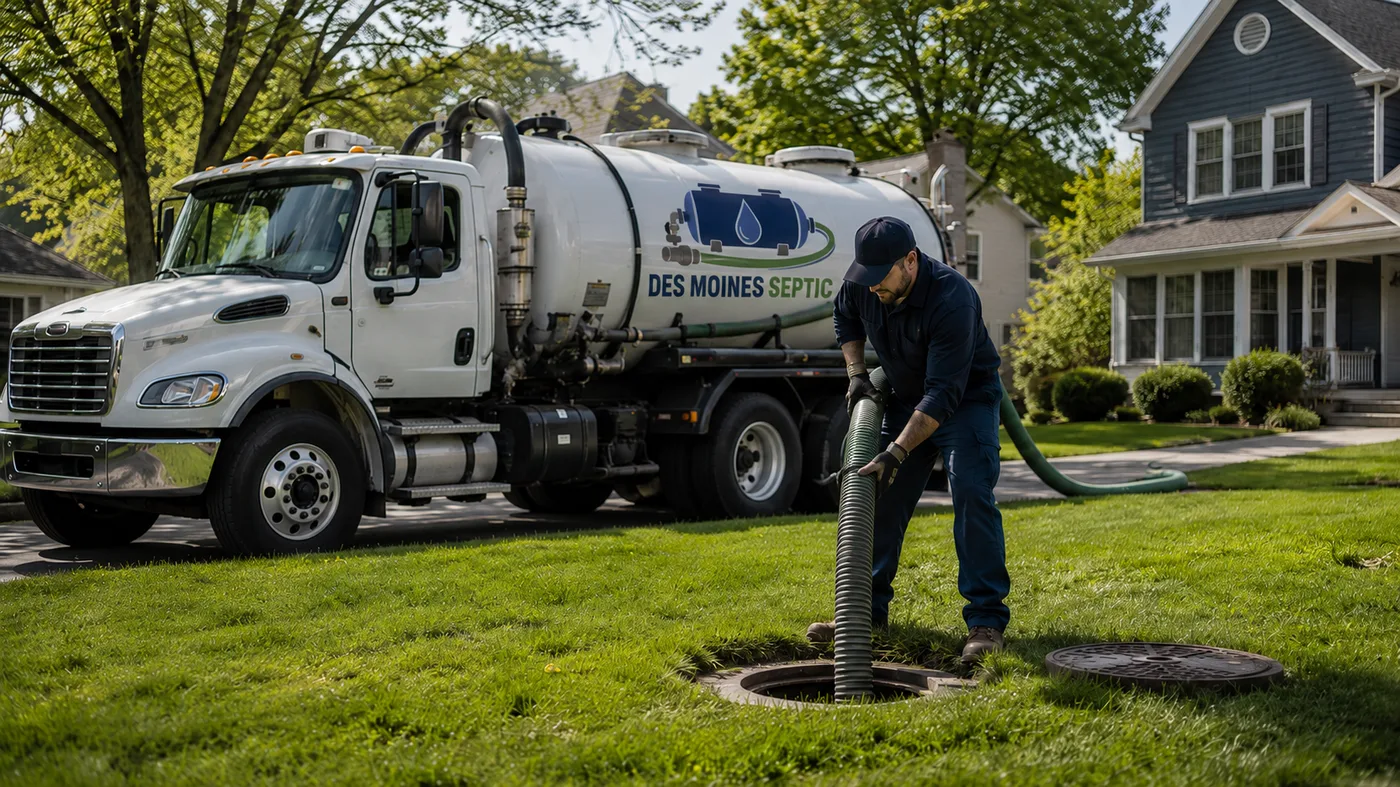
- Open the tank. The inspector either pumps the tank and disposes of the contents during the inspection, or accepts proof of pumping within the prior three years by a licensed cleaner who documented tank size and condition.
- Document tank size and condition. Material (concrete, plastic, fiberglass), capacity, baffle condition, inlet and outlet integrity, structural cracks, lid condition.
- Evaluate secondary treatment. This is the drain field, mound, ATU, or whatever moves treated effluent into the soil. The inspector looks for surfacing, saturation, root intrusion, hydraulic overload signs, and any indication the field is failing.
- Document the system layout. Tank location, field location, any unusual configurations.
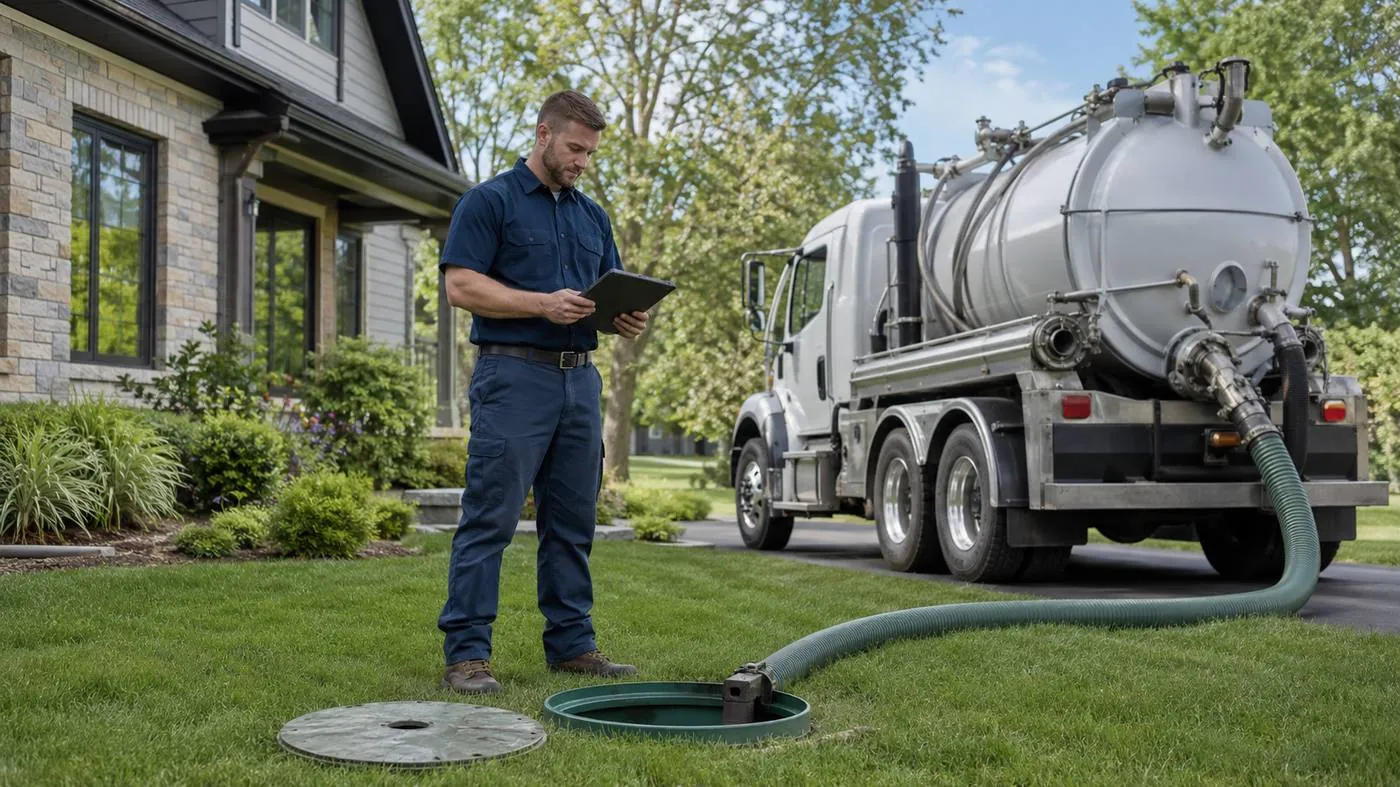
- File the report with Iowa DNR. The inspector files the official Time of Transfer inspection report with the state.
Inspections typically take one to two hours on-site, plus a few days for the written report.
What Counts as a Failing System?
Iowa rules call these "sub-standard systems." The two most common reasons a system fails inspection:
- No secondary treatment. Some older Iowa septic systems were installed with just a tank and a "seepage pit" or no drain field at all. These don't meet current standards and will be flagged.
- Failed secondary treatment. The drain field is saturated, surfacing effluent, or otherwise not absorbing wastewater properly.
Other failure reasons include severely cracked or collapsed tanks, missing baffles, inlet or outlet pipes that have failed, and unsafe lids.
What Happens When a System Fails: Seller vs. Buyer Responsibility
This is where TOT inspections get expensive. A failing septic system in Iowa typically requires repair or full replacement to bring the property into compliance. Costs vary widely:
- Minor repairs (baffle replacement, riser install, inlet repair): $500 to $2,500
- Tank replacement: $5,000 to $10,000
- Full system replacement (new tank plus new drain field or mound): $10,000 to $25,000+, with engineered mound systems on difficult lots pushing higher
Iowa law does not assign repair responsibility to either the seller or the buyer by statute. The actual responsibility is negotiated in the purchase agreement, usually through one of these mechanisms:
- Seller cures before closing. Most common. Seller fixes the system, buyer closes on a compliant property.
- Price credit at closing. Buyer takes responsibility for the repair, seller credits them at closing for the estimated cost.
- Escrow holdback. A portion of the sale proceeds is held in escrow until the repair is completed, often within 30 to 90 days post-closing.
- Deal renegotiation or termination. If the failure is large enough, sometimes the buyer walks.
Iowa real estate contracts often address this directly in the septic system addendum. If you're selling and your inspection shows a failure, talk to your agent and your attorney early. The faster you scope the repair, the cleaner the negotiation.
What Sellers Should Do Right Now
- Pump records. Find every receipt you can for past pumping. A pump within the prior three years satisfies part of the inspection.
- Get a system layout. If you have an as-built drawing from when the system was installed, find it. If you don't, the inspector will document it on-site.
- Schedule early. Don't wait for buyer pressure. A bad inspection finding two weeks before closing is a worst-case scenario.
- Walk the field. Look for wet spots, lush grass strips, sewage smell, or visible surfacing. Better to know before the inspector tells you.
What Buyers Should Do
- Get the inspection report. Ask for the actual written DNR-filed report, not just verbal confirmation that the inspection happened.
- Read the system description. Tank size, material, age, drain field condition. This tells you what maintenance you're inheriting.
- Note the pump date. If the tank was pumped within the prior year as part of the inspection, your clock resets. If it was just inspected from documentation, you're still on the existing pump schedule, and you may want to schedule septic tank pumping in Des Moines shortly after closing.
- Budget for future pumping. See our guide to how often Iowa homes should pump.
Get an Iowa Time of Transfer Inspection
We provide Iowa Time of Transfer inspections across Polk, Dallas, Warren, Madison, Marion, Jasper, Story, and Boone Counties. All inspections are performed by Iowa DNR certified inspectors, with reports filed directly with the state on your behalf.
If you're listing a property on septic, planning to list within the next year, or under contract and need an inspection scheduled, call (515) 303-4896 or request an inspection online. The earlier we get on your calendar, the less stress your closing will be.